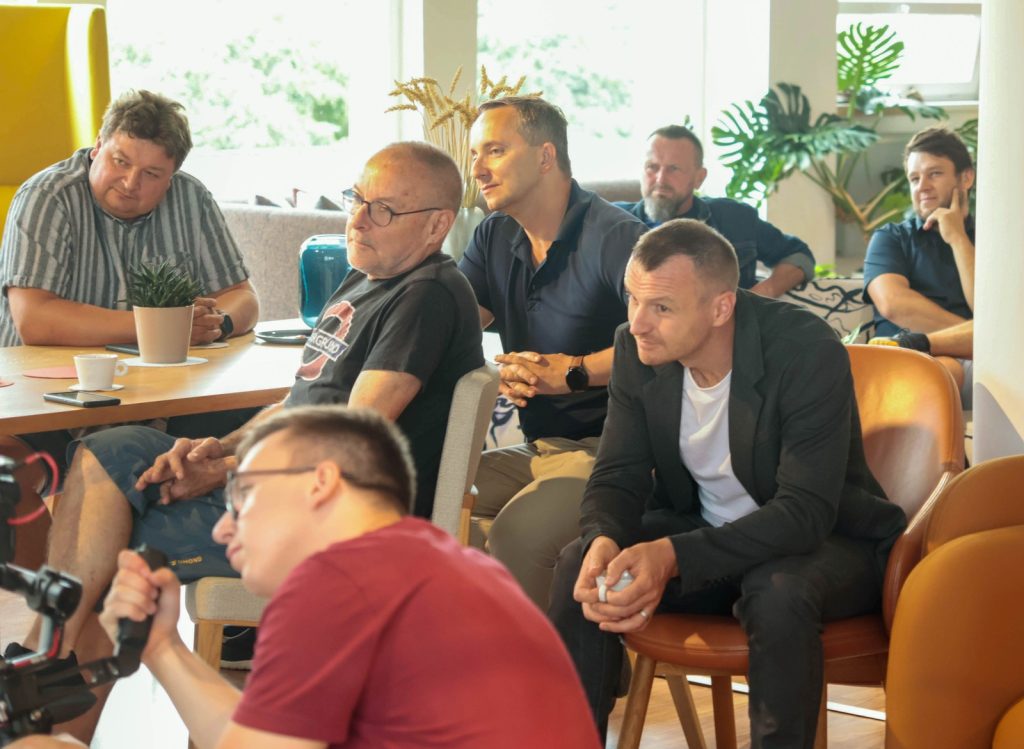
Focus Group at a family business in Hradec Králové
At the end of the summer holidays, we organized an inspiring meeting for a group of vocational secondary school teachers from the Královéhradecký Region with representatives of the family business Polstrin s.r.o. The aim of the meeting was not only to gain insight into the production of traditional upholstered sofas, but also to discuss the connection between schools and companies in the field of education and the preparation of future graduates.

From production to the final product
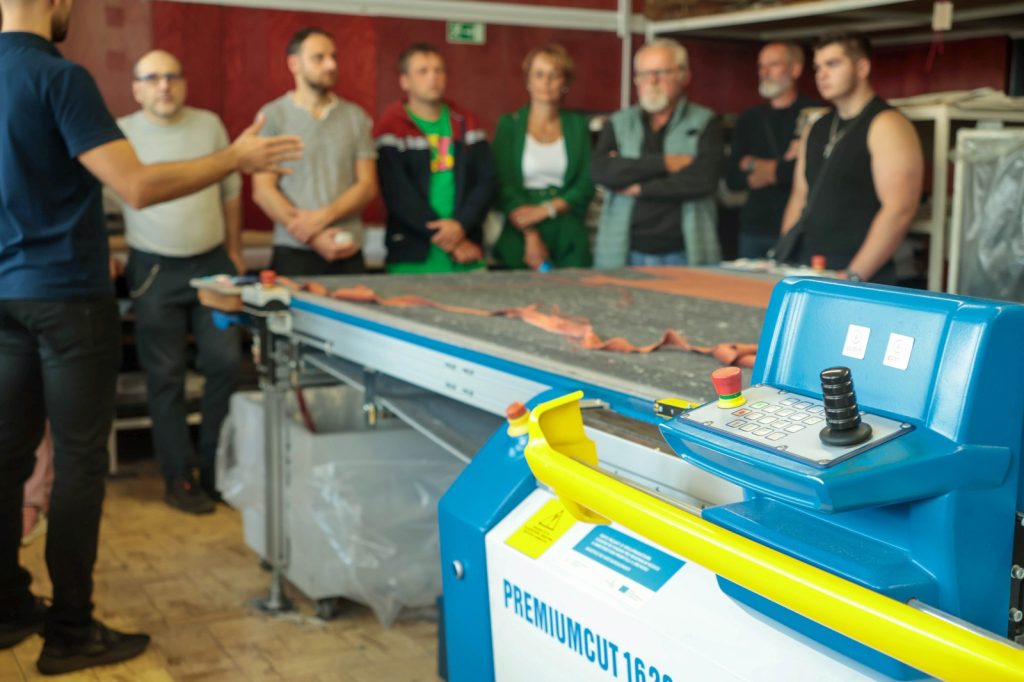
The company owners, Karel and Ondřej Pacák, guided the guests through the entire production process – from the selection of suitable materials to cutting, sewing, choosing the padding, and the final assembly of the furniture. The teachers were thus able to see how modern technology is combined with manual labor, which is indispensable for small-batch production.
Sustainability as a mission
Sustainability was also a major topic of the excursion. Polstrin has been dedicated to it for a long time, whether through the quality of products that last for generations in households or by minimizing textile waste. Residual materials find new uses, for example, in the form of handbags, gloves, and other small products.


A quick visit to Mezi švy
The visit also included a tour of Hotel Mezi švy – a unique showroom that combines designer interiors with industrial architecture.

Graduate expectations vs. practice
The meeting at Polstrin brought stimulating ideas to both sides and showed that connecting education with practice is an essential condition for the successful preparation of graduates for the labor market. The mutual bond and synergy between schools and companies are thus becoming a key prerequisite for the future of crafts and the region.

Renata Říhová
RIS3 Developer
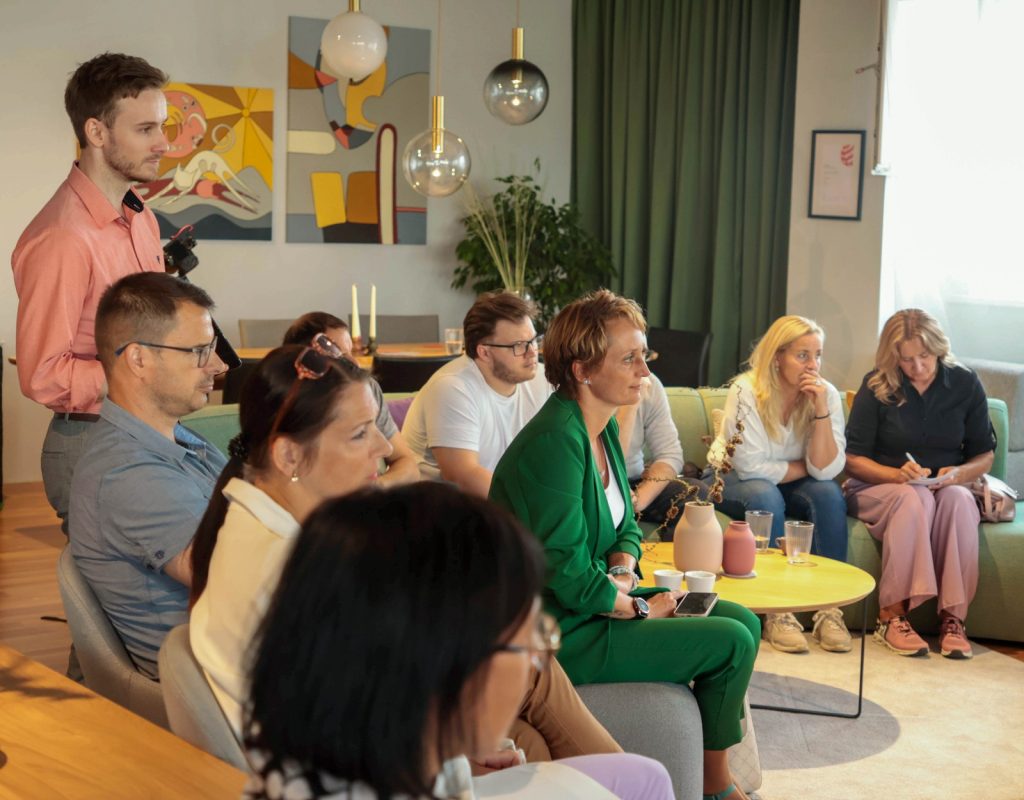
Time was also reserved for a debate between the teachers and Karel, Ondřej, and David Pacák, as well as Valérie Turečková, who is responsible for the company’s marketing. The discussion focused on finding ways to make craft fields more attractive and to motivate young people to study and subsequently remain in the trade. It turned out that graduates usually do not lack professional skills themselves, but the problem lies more in their application in practice, a lack of motivation, and sometimes a lack of will to work.
Cooperation between schools and companies should come first.
Therefore, not only is the cooperation between schools and companies key, but also a change in the approach of educational institutions. These should further develop competencies such as independence, problem-solving skills, establishing cooperation, and fostering long-term work motivation.